In this issue: What's in an accent. Why you should be proud of yours. And a beautiful poem by Arsimmer McCoy.
Clique aqui pra ler em português.
How Kind is a reader-supported publication. To receive new posts and support independent publishing, consider becoming a free or paid subscriber. All posts are and will always be free, but if you’d like to support my work, you can contribute in a few ways:
I recently received the following message:
As a fellow Brazilian, I really admire your public speaking. I want to get more into tech conferences and recording videos, but I'm embarrassed by my strong accent. How did you get rid of yours?
Setting aside the kind words, it's important to state upfront that I have never gotten "rid" of my accent.
Here's a not-so-secret secret: everyone has an accent. Full stop.
An accent is an auditory fingerprint. The fingerprint of the voice.
You carry within your body all the emotions, learnings, experiences, and scars you've lived through. And your accent is just another part of that.
Your accent is a beautiful tapestry of your own history and of those that came before you.
The subtle ways you pronounce certain words. What you find easy to say. What always trips you up. The way your tone of voice sings. The way you hold certain syllables out for a beat longer. The parts you cut off, almost like a whisper, barely saying them at all.
Our accents are music.
And of course, they are projected through our own unique biology - the shape our mouths, our throats, our tongues.
Getting "rid" of your accent should never be the goal. Whether you're speaking your native tongue or learning a new language. You'll just set yourself up for unreasonable expectations.
An accent is a sign of courage. If you're embarrassed about "having an accent" when speaking another language, don't forget:
You are a badass.
And you are doing the amazing work of thinking in multiple languages, and trying to keep them all straight in real time, as the words come streaming out your mouth.
I know a lot of us empathize with Sofia Vergara's character Gloria in Modern Family:
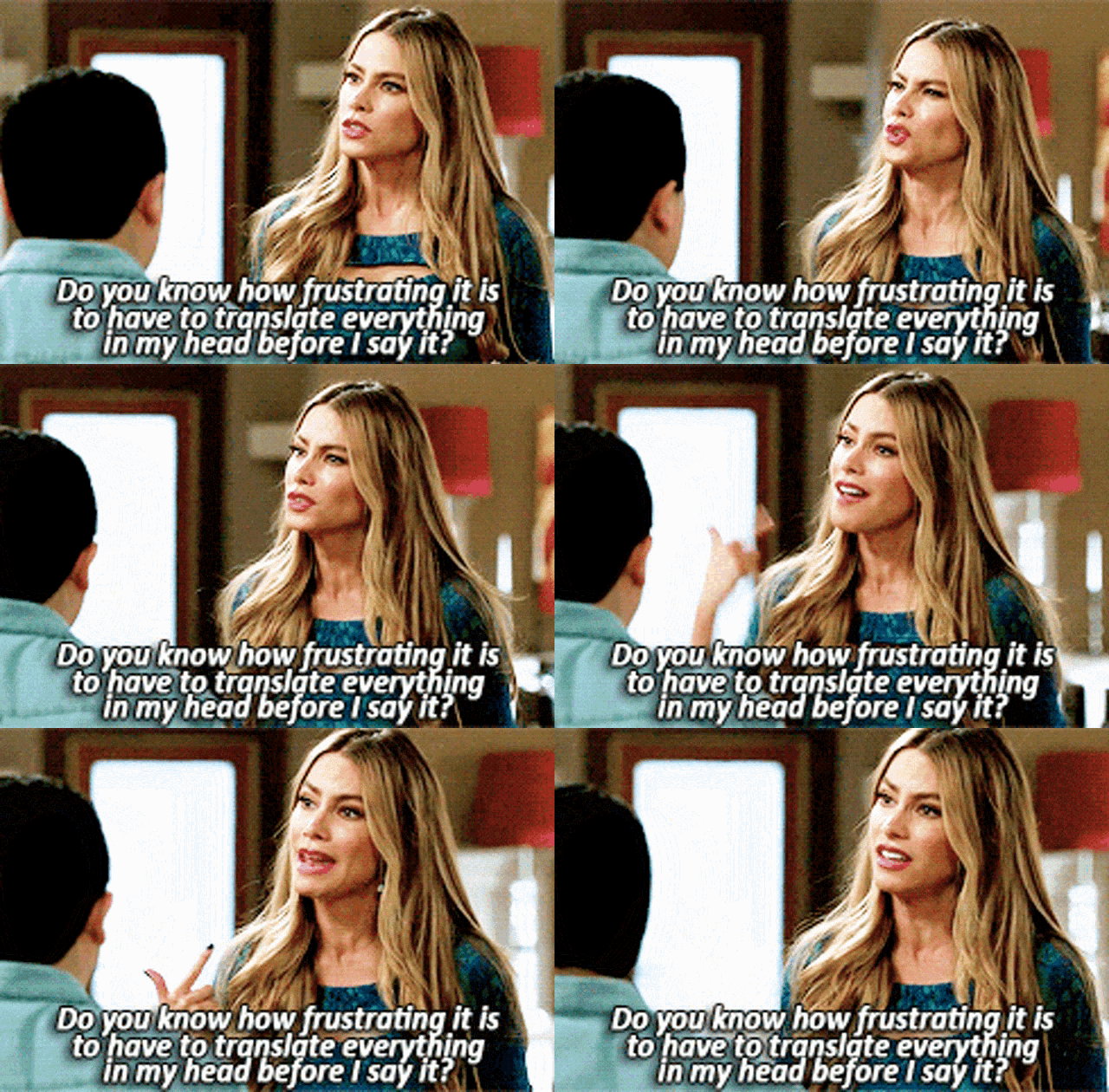
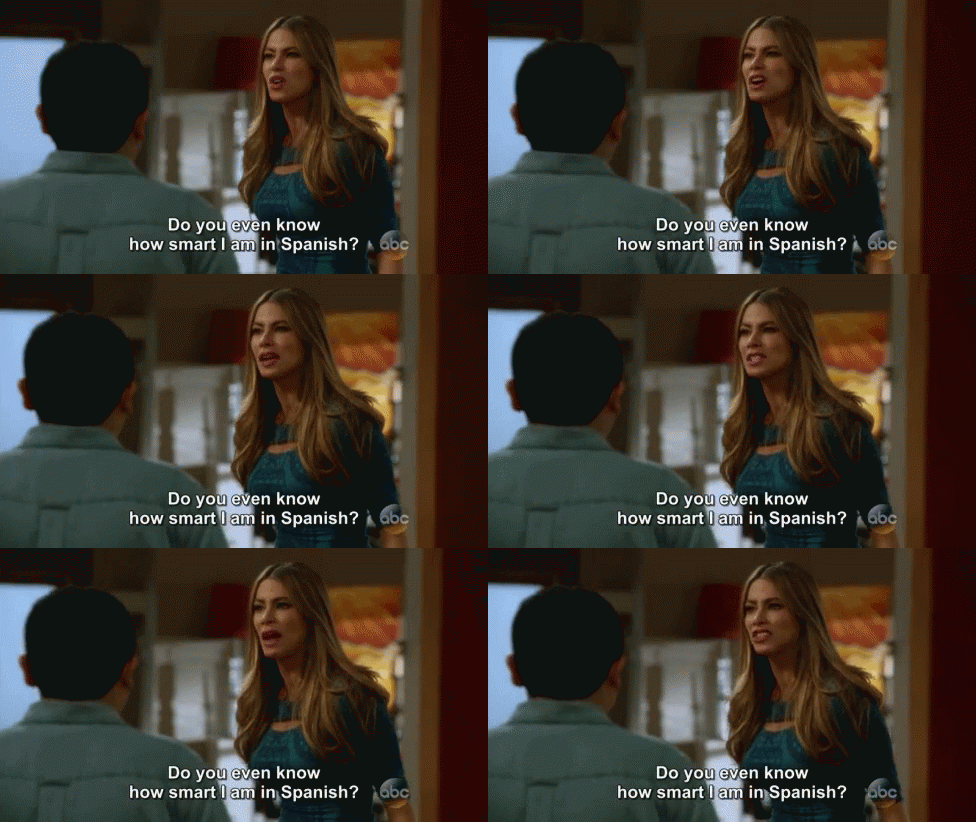
We need to be more patient with each other. Recognize how badass we all are and how we're just trying to communicate with one other.
When I first joined Netflix, one of the first things I noticed immediately was how many different accents I was hearing from those around me. To this day, it's the most diverse company I've worked at. Netflix creates content for audiences all over the world. And the make-up of the employees reflected that. I heard a beautiful orchestra of accents every single day. And those accents were being projected through our shared usage of English.
I understand the meaning behind the original question of "how did you get rid of your accent?" That is, how does one sound more like a native speaker, and what was my own experience with that?
Although my first language was Portuguese, my family moved to the US when I was very young. So I was barely speaking anything in the first place. Portuguese is the language of my heart and soul, and English is the language of my brain.
But moving to the US wasn't an automatic "cheat code" to help me sound more like a native English speaker.
And even when you do all you can to sound as natural as possible when speaking a language foreign to you - whether or not you sound like you have a "native" accent or not - people will never be satisfied.
Throughout my whole life, I've experienced variations of this conversation countless times:
- "Oh, you're Brazilian? But your English is so good!"
- "You weren't born here? But you don't have an accent!"
- "Oh, you're not from here? I know, I could tell by your accent."
- "Where's your accent from? You don't sound like you're from here"
- "That's ok, I can tell it's not the most natural language for you."
- "I knew you were Carioca (note: someone from Rio de Janeiro) from the moment you opened your mouth."
I get it. Most of the time, these comments are innocent. People ask from a place of curiosity. We have an innate need to categorize; to place others within their own formed view of the world; to want to relate to others and feel closer to them, and part of that is by trying to put them in some kind of box.
I absolutely love listening to podcasts or watching talks (in tech or otherwise), and hearing an accent that isn't the typical "native American English". It paints a beautiful picture of that person. It makes me lean in and listen even more intently.
If you're self-conscious about your accent - in whatever language - but want to get out there, record content, get up on stage, etc. - there are ways to feel more comfortable speaking that language. I think the way you can go about it is not "I want to get rid of my accent" but rather "I want to sound more natural speaking it".
And to do that, you have to live and breathe that language. Immerse yourself in podcasts, conversation circles, movies, music... anything and everything that interest you, in that language!
But first and foremost - be proud of your accent. Of your voice.
I'm proud of my own Carioca accent when I speak Portuguese. And my own version of it infused with my having grown up in an English-speaking environment.
I'm proud of my Carioca-tinged Miami-soaked American English accent. It's unique and it's mine.
Don't forget that an accent is always changing. Just as language is always changing. Just as we are ever-changing.
My accent shifts slightly depending on who I'm with or what I'm doing. How nervous or how comfortable I'm feeling.
My accent is chameleon.
Think about whether you find yourself being too quick to judge when you hear someone speak. Or if you struggle to understand someone speaking your language, but in an accent you're not as accustomed to hearing.
Be patient. Ask for clarification. Make an effort. Be empathetic.
We are wired to making assumptions about our world. About everything we experience. Everyone we meet.
And accents are no different. We make so many assumptions when we hear an accent. There are so many societal prejudices and assumptions baked into our own understanding of a given accent.
That person is too dumb.
Too rural.
Too much of a city person.
Too smart.
Too posh.
And this has real effects on people.
Some people aren't hired because of their accents.
Some people are ignored and brushed off because they sound "too foreign".
There is no better way to end today's post then with Florida-based poet Arsimmer McCoy's gorgeous I do got an accent (2025-2026 Marjory Stoneman Douglas Poetry Prize Winner). I am sharing it below in its entirety - please go check out their full work <3
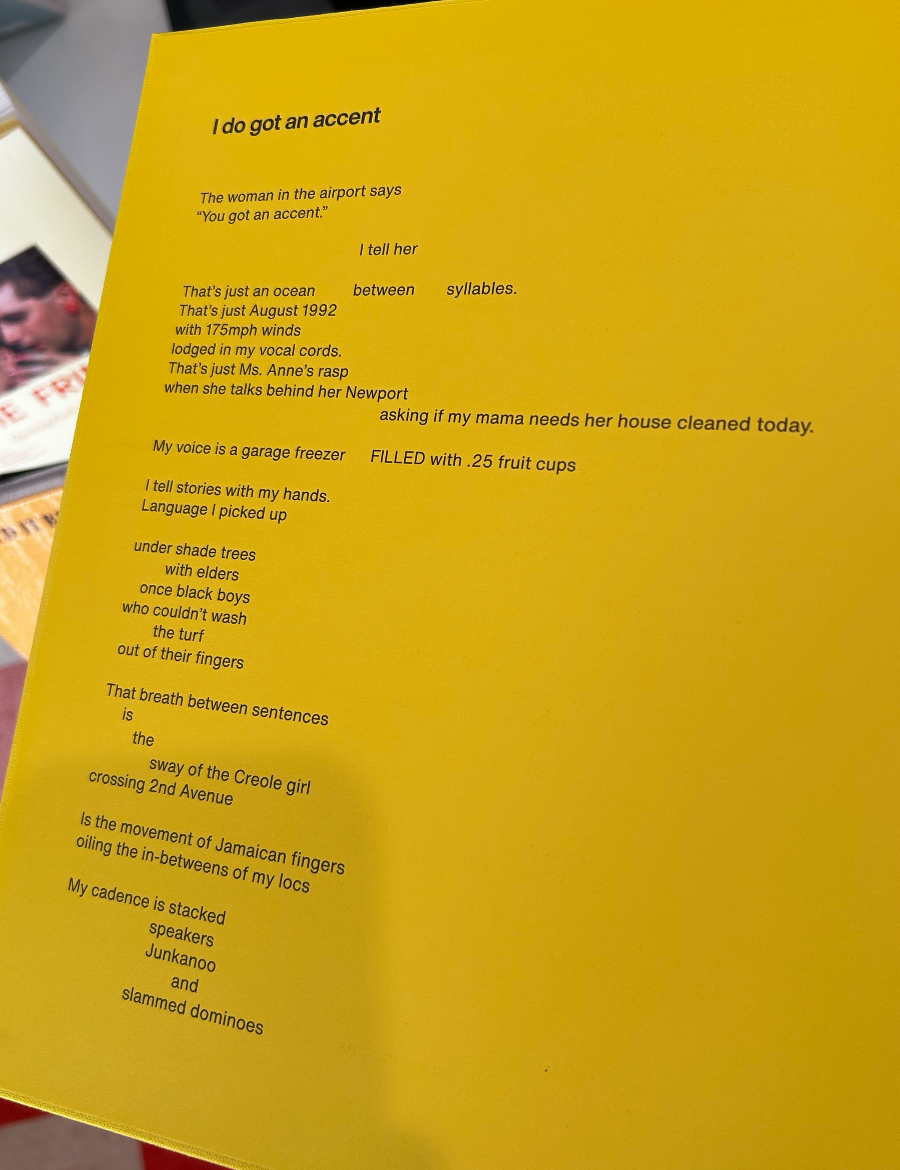
 2025-2026 Marjory Stoneman Douglas Poetry Prize Winner](https://storage.ghost.io/c/9e/62/9e623c7b-ffb3-4f27-a9a2-4b97c440a7b3/content/images/2026/10/CleanShot-2026-09-07-at-19.18.05@2x-1.png)
☕️ I'd love to hear from you - what is your relationship with your accent? With your voice? Any topic ideas for future issues? Comment below or shoot me an email at howkind@mateusdasilva.com :-)
Support Me
Did you gain something from reading this post? Consider chipping in to support me financially via a one-off or recurring payment. It'll go a long way in helping me publish more and keep How Kind going. Thank you <3
🎷This was issue #9 of How Kind, spreading kindness, one newsletter at a time. See the full archive here.